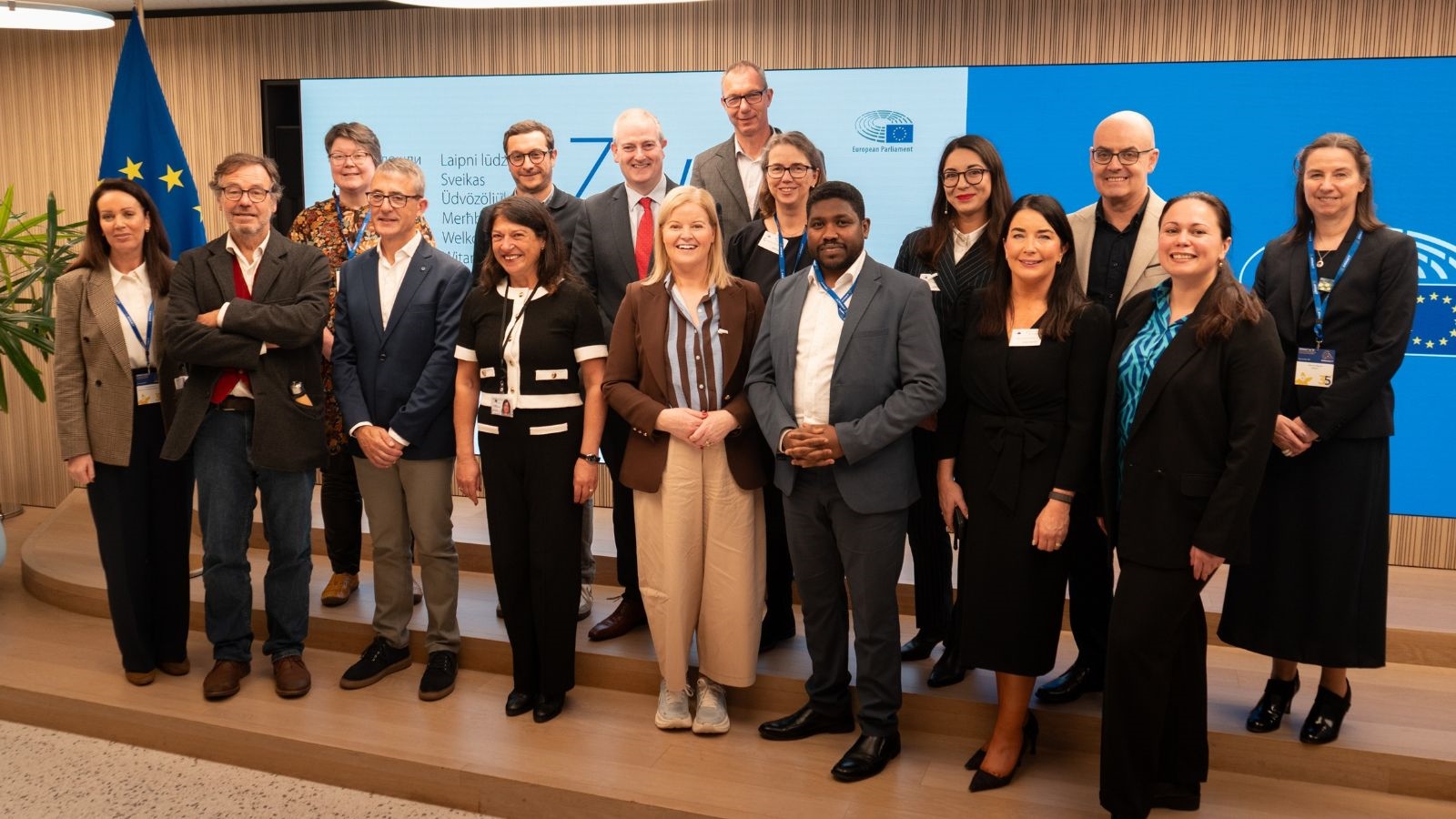
ERNACT IMC members and staff at the European Parliament in Brussels
The event, ERNACT at 35: Connecting Regions, Driving Innovation, brought together representatives from EU institutions, regional authorities, universities and ERNACT partner regions to reflect on three decades of cooperation and discuss what the next generation of EU programmes could mean for rural, peripheral and cross-border regions.
Founded in 1991 by Donegal County Council and Derry City and Strabane District Council, ERNACT has grown from a cross-border initiative into a European digital transformation network with 11 member regions. Based in Letterkenny, Co. Donegal, the network has helped mobilise approximately €137 million in EU funding through more than 90 European projects involving over 350 partner regions.
Cllr Martin Reilly, ERNACT Chairperson and a member of Derry City and Strabane District Council, opened the event by reflecting on the network’s cross-border roots and the partnerships it has built across Europe. Dr Caitriona Strain, ERNACT General Manager, paid tribute to the people whose vision and commitment shaped its work. She drew on that experience to consider how the needs of peripheral regions have changed and how future EU programmes could respond.
In his keynote address, Ciaran Mullooly, MEP for the Midlands–North-West constituency, examined the future of EU Cohesion Policy and territorial cooperation beyond 2027.
Veronica Gaffey, Director-General of the European Commission’s Directorate-General for Digital Services (DG DIGIT), discussed how regions can improve digital public services, interoperability and emerging to use across technologies make them easier borders and respond to advances in artificial intelligence.
Inmaculada Valencia, Director of the Government of Cantabria’s Brussels Office, brought a regional perspective to the discussion, describing how networks such as ERNACT help regions share expertise and develop joint projects.
Clive Peckham of the Digital Nièvre Joint Authority moderated a panel on how EU cooperation beyond 2027 could support regional development, innovation and competitiveness. Panellists Barry Cowen MEP, Veronica Gaffey, María Llambrich Arias of the Basque Country’s Delegation to the EU, Dr Emilija Stojmenova Duh of the University of Ljubljana and Inmaculada Valencia considered how regions with different resources and capacities could participate in and benefit from the digital and green transitions.
Prof Dr Andrej Koz, Chairperson of ERNACT’s Interregional Management Committee, closed the seminar by highlighting what international partnerships can deliver when regions share what works and put it into practice. That will remain a focus for ERNACT as it helps regions secure EU funding and develop digital projects that improve public services and benefit local communities.
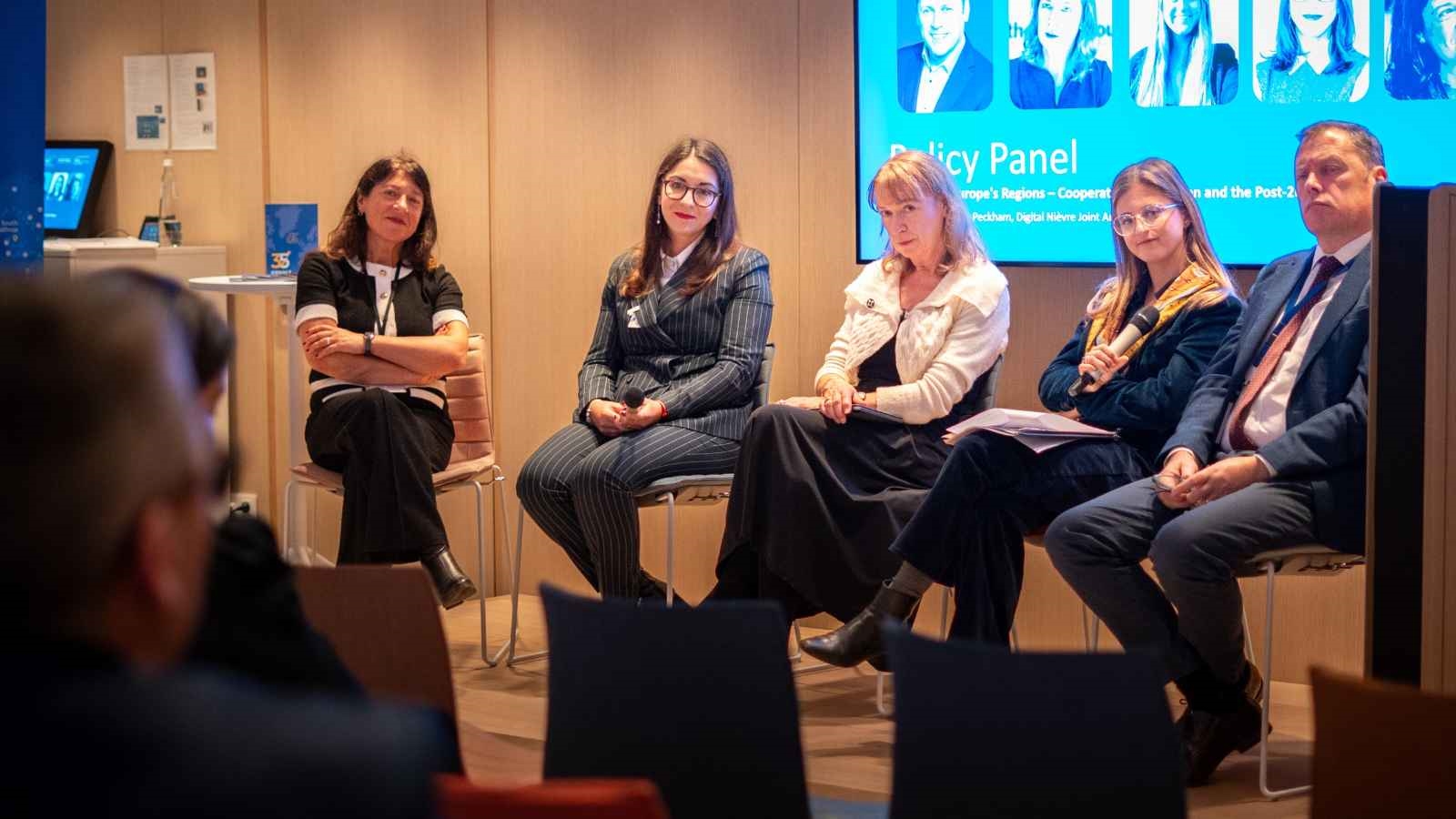 Inmaculada Valencia, Emilija Stojmenova Duh, Veronica Gaffey, María Llambrich Arias, Barry Cowen MEP